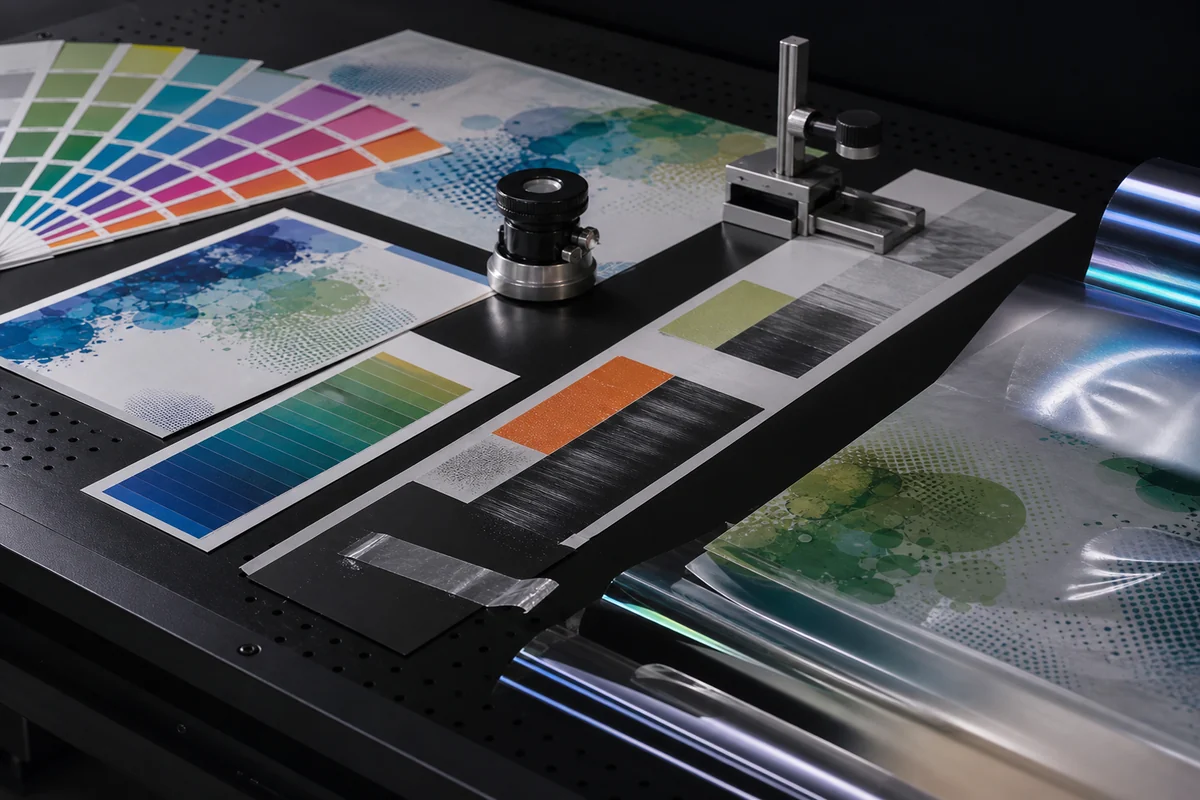
Custom water-based ink color matching
Prepare the substrate, process, target reference, transfer setup, speed, drying, and trial feedback for a flexo or gravure color discussion.
Open color matching serviceTechnical support
Start water-based flexo or gravure ink troubleshooting with the visible press symptom, substrate, transfer setup, working-ink history, drying path, and downstream test. Varnish and color-matching routes are separated so the site describes assistance, not guaranteed correction.
Technical guides
Each guide defines a planned validation or observed symptom, lists the evidence to collect, and gives a controlled trial path without promising a universal result.
Prepare the substrate, process, target reference, transfer setup, speed, drying, and trial feedback for a flexo or gravure color discussion.
Open color matching serviceWhen water-based ink is not drying as expected, the visible symptom may come from the ink, the amount transferred, the substrate, available air movement, the press condition, or what happens immediately after printing. A useful review separates those variables before changing the formulation.
Open diagnostic guideFoam in a flexo or gravure ink circuit is often a system problem before it is a formulation problem. Air can be pulled into the return, pump, chamber, hose connection, or falling stream, while ink condition and contamination determine whether those bubbles collapse or remain stable.
Open diagnostic guideWater-based ink adhesion on film is a compatibility result, not a property of the ink alone. Film chemistry, print side, treatment age and uniformity, surface contamination, ink selection, transferred film, drying, overprints, and later converting steps all affect the observed result.
Open diagnostic guideWeak rub or scuff resistance is not a single defect. Damage may come from incompletely dried ink, poor binding to the substrate, an unsuitable ink or varnish direction, incorrect film weight, weak intercoat compatibility, a rough contact surface, or handling that is more severe than the original test requirement.
Open diagnostic guideA weak flexo print does not by itself prove that the ink is weak. Compare the failing print with an approved or acceptable reference, then separate ink condition, transfer, plate and impression, substrate, dilution, and drying before selecting one controlled check.
Open diagnostic guideUse this guide to plan a controlled A0126 coating-to-print trial on the actual substrate. It separates material and surface preparation, coating and drying, the subsequent ink and print step, the agreed evaluation, and the records needed before a production decision.
Open validation checklistTroubleshooting
Each issue should be discussed with real production details. The right adjustment may involve ink, varnish, substrate, drying, press control, or handling.
| Problem | Possible direction | What we need from you | Trial note |
|---|---|---|---|
| Slow drying | Review dryer capacity, press speed, substrate absorbency, ink film and dilution balance. | Substrate, process, speed, dryer condition, ink dilution and current drying time. | Assist analysis only; final drying window must be confirmed on the real press. |
| Foaming | Check circulation, pump condition, viscosity, pH, defoamer approach and press-side handling. | Circulation setup, foam timing, viscosity/pH readings, dilution and photos if available. | Foam control may involve both ink adjustment and press-side handling. |
| Poor adhesion | Review substrate type, surface treatment, ink selection, drying and downstream processing. | Substrate sample, treatment details, print structure, drying setup and adhesion test method. | Film and treated surfaces require case-by-case trial confirmation. |
| Weak rub resistance | Evaluate ink film, drying, varnish option, coating weight and handling requirement. | Printed sample, rub test method, finish target, substrate and downstream handling condition. | Varnish may help, but final performance depends on the full print structure. |
| Blocking / sticking | Check residual moisture, stack temperature, drying window, varnish film and pressure. | Stacking condition, time before stacking, dryer setup, substrate and coating details. | Trial should include realistic stack temperature and handling conditions. |
Product links
Technical support is more useful when the product, process, and application are all clear.
For paper, paperboard, corrugated board, paper bags, and related paper packaging.
For treated-plastic-film gravure trials with application-specific matching.
WOP inline gloss finishing for printed paper and paperboard packaging.
A0126 for a uniform matte, subsequent-print-receptive surface on paper, treated film, pearlized film, or a verified synthetic material.
24-10-33 tactile water-based varnish for sample-led soft-touch and matte-finish trials on paper, board, and treated film.
L-2455 for trial-based wet lamination of metallized PET film to paper or paperboard.
JD Series for structure-specific paper transfer lamination and peel-transfer trials.
Sample and trial workflow
A useful technical-support cycle records the actual material and process, changes one controlled variable at a time, verifies downstream conversion, and retains the approved sample and conditions.
Six-stage sample and trial path
Can assist analysis of dryer capacity, press speed, substrate absorbency, ink film, and dilution balance.
Can help review circulation, pump condition, viscosity, pH, defoamer approach, and press-side handling.
Can support checks around substrate type, surface treatment, ink selection, drying, and downstream processing.
Can assist evaluation of ink film, drying, varnish option, coating weight, and handling requirement.
Can help review varnish selection, coating weight, drying consistency, substrate variation, and line conditions.
Can assist analysis of residual moisture, stack temperature, drying window, varnish film, and pressure.
FAQ
Confirm the substrate, surface treatment, press setup, ink film, dilution history, drying condition, and downstream process first. A visible symptom can come from several interacting factors, so an ink change should follow a structured review rather than replace it.
Transfer system, circulation, dryer capacity, press speed, substrate condition, treatment level, ambient conditions, and operator control can all change the result. Compare the two press environments and printed samples before drawing a conclusion.
Use a controlled trial when the substrate, treatment, print structure, drying window, finish target, or downstream test differs from the available evidence. Record one change at a time and confirm the result with the agreed test method.
Send the substrate, press details, current issue, and target property. JLJ Coating can help analyze the matching direction and sample requirements.